Network admins often find themselves torn trying to juggle between optimizing configurations and meeting compliance requirements. With growing network complexity, achieving and sustaining CIS Benchmarks compliance can feel like an endless battle. However, it doesn’t have to be so daunting.
While the CIS Benchmarks offer vital best practices for securing against evolving threats, manually enforcing them across an expanding network quickly becomes a costly and error-prone endeavor.
This blog will explore how CIS Benchmarks enhance network security and their critical role in compliance.
We’ll then show you how automation with tools like ManageEngine Network Configuration Manager can streamline the process, making compliance effortless and sustainable.
CIS Benchmarks: A quick overview
The CIS creates widely recognized security benchmarks. These are essentially best practices for securely configuring devices, systems, and applications.
These benchmarks cover a vast array of technologies, including:
- Key network components like routers, firewall, switches
- Various operating systems, including Windows, Linux, and macOS
- Leading cloud environments like AWS, Azure, and Google Cloud
- Key databases such as MySQL and PostgreSQL
- Common applications like web servers and email servers
The core idea is this: implementing these standardized configurations directly lowers vulnerabilities and prevents everyday exploits.
For example, a CIS Benchmark for routers could recommend securing management interfaces, enforcing strong password policies, and disabling unneeded services. Each of these actions makes your network more secure and less susceptible to compromise.
The Importance of CIS Benchmarks for Network Admins
Small configuration mistakes often escalate into significant security breaches. Fortunately, CIS Benchmarks help network admins proactively remove these vulnerabilities before they can be exploited.
When you implement the CIS Benchmarks, you:
Ensure consistency: By standardizing device configurations, you’ll streamline management and cut down on potential errors.
Minimize attack exposure: Get rid of typical vulnerabilities, actively making it harder for attackers to breach your network.
Prepare for Compliance Audits: Comply with key regulations like PCI DSS, HIPAA, and NIST guidelines, which simplifies your audit processes.
Optimize Operations: Put standardized configurations in place to make your network more secure and way more efficient.
Adhering to CIS Benchmarks strengthens your network’s security and streamlines daily administration, making it easier and more predictable.
Difficulties of manual implementation
Even though CIS Benchmarks offer a clear roadmap to better security, manually implementing them across an entire network is a daunting and repetitive task.
Each device requires individual auditing, deviation identification, and correction, all while ensuring continuous network uptime and minimal disruption.
For networks spanning dozens to thousands of devices, this manual process quickly becomes unmanageable.
Relying on manual workflows not only wastes valuable time and resources but also significantly increases the chance of human error, leading to inconsistent configurations that undermine your network’s overall security.
How ManageEngine Network Configuration Manager simplifies things?
ManageEngine Network Configuration Manager automates CIS Benchmark compliance, making the entire process far simpler for network admins. Here’s how it helps:
Streamlined Compliance Audits:
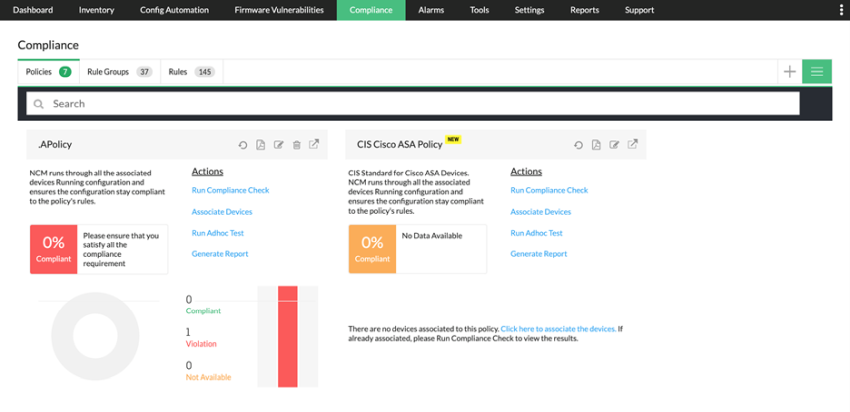
Network Configuration Manager lets you automate CIS Benchmark compliance audits for your network devices. You can set up routine scans, making sure your configurations constantly align with the most current CIS standards and best practices.
Ready-to-use and Custom Compliance Policies:
With Network Configuration Manager, you get the best of both worlds: prebuilt CIS Benchmark policies for quick deployment and the flexibility to create custom policies tailored to your exact network requirements.
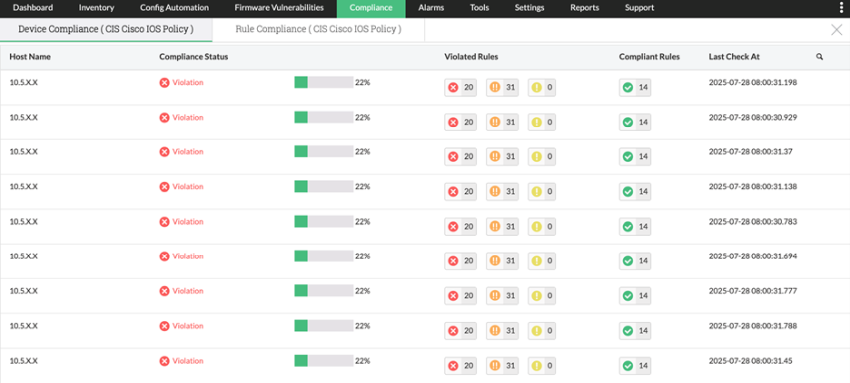
Instantaneous issue resolution:
When a device goes out of compliance, Network Configuration Manager offers instant fixes, like predefined configuration templates.
You can deploy these changes in just a few clicks, instead of applying them manually, which drastically cuts down remediation time.
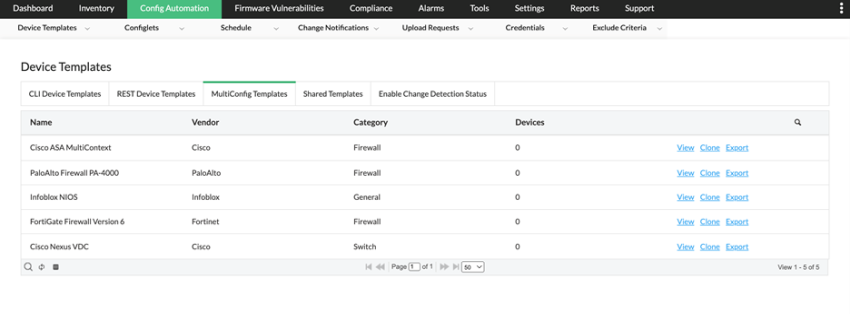
In-depth Reporting:
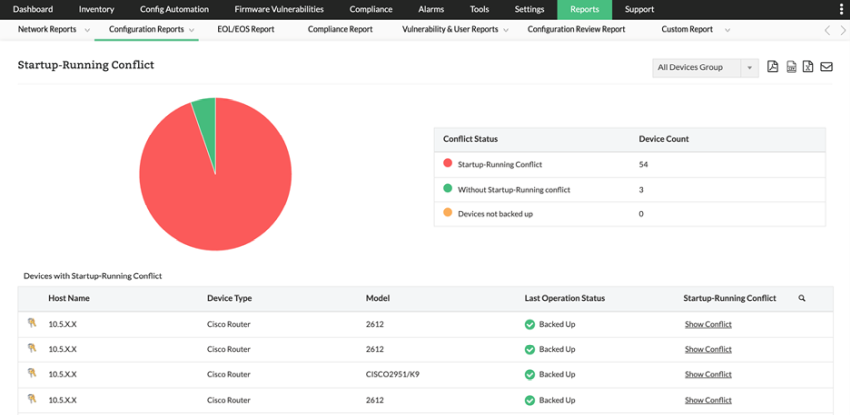
Network Configuration Manager automatically generates detailed compliance reports for your internal audits and compliance checks.
These reports not only pinpoint areas for network improvement but also effortlessly demonstrate compliance to auditors and stakeholders.
Making Compliance Easy, Even for Large Networks
For network admins overseeing hundreds of devices, automating CIS compliance is a game-changer. Here’s how Network Configuration Manager can significantly benefit your organization:
Enhanced Security Posture: By regularly auditing and aligning devices with CIS best practices, you’ll reduce vulnerabilities and proactively build a more resilient network against attacks.
Lowered Operational Overhead: By automating manual tasks, network admins gain valuable time to dedicate to strategic initiatives, which improves overall productivity.
Streamlined Audits: With compliance reports, demonstrating adherence to regulations and best practices becomes straightforward, leading to better audit outcomes.
Final Words
With misconfigurations being a primary culprit in network breaches today, implementing CIS Benchmarks is no longer optional; it’s a critical requirement. Yet, achieving compliance across extensive networks doesn’t need to be a difficult undertaking.
ManageEngine Network Configuration Manager empowers network admins to fully automate CIS Benchmark compliance, ensuring continuous adherence with ease.
For all your devices from routers and switches to servers it simplifies compliance, enhances network security, and significantly cuts down on administrative tasks.
Integrating CIS Benchmarks into your configuration strategy means more than just compliance; it means a resilient, secure, and easily manageable network. Get started today: Download a 30-day free trial or schedule a free personalized demo!
Author Name: Sandhya Saravanan
About the Author: Sandhya Saravanan is a Product Marketer at ManageEngine. She creates user-friendly content that drives awareness around advanced network monitoring, observability, and AIOps. Beyond work, she’s an art enthusiast and volunteers at a non-governmental organization.
Related Posts
- What is Cisco Identity Services Engine (ISE)? Use Cases, How it is Used etc
- What is QUIC – This Modern Internet Protocol Makes Firewalls Blind
- 5 Best Practices to Keep Rogue Devices at Bay
- Cisco Talos Year in Review – Top Cyber Security Threats in 2023 and Beyond
- How to Scan an IP Network Range with NMAP (and Zenmap)